Smart Strategies for Modern Building System Design
Modern construction projects demand more than strong foundations and attractive architecture. Today’s buildings require efficient mechanical systems, reliable electrical infrastructure, advanced fire protection, sustainable plumbing solutions, and integrated technology that works together seamlessly. Building system design has evolved into a highly specialized field where efficiency, sustainability, safety, and performance determine project success.
Whether designing commercial spaces, healthcare facilities, residential developments, educational institutions, or industrial projects, modern building systems require a strategic approach that balances innovation with functionality. This is where experienced engineering teams become essential.
At R&P Consulting Engineers, building system design is approached with a commitment to innovation, precision, collaboration, and practical engineering solutions that support long-term project success.
Understanding Modern Building System Design
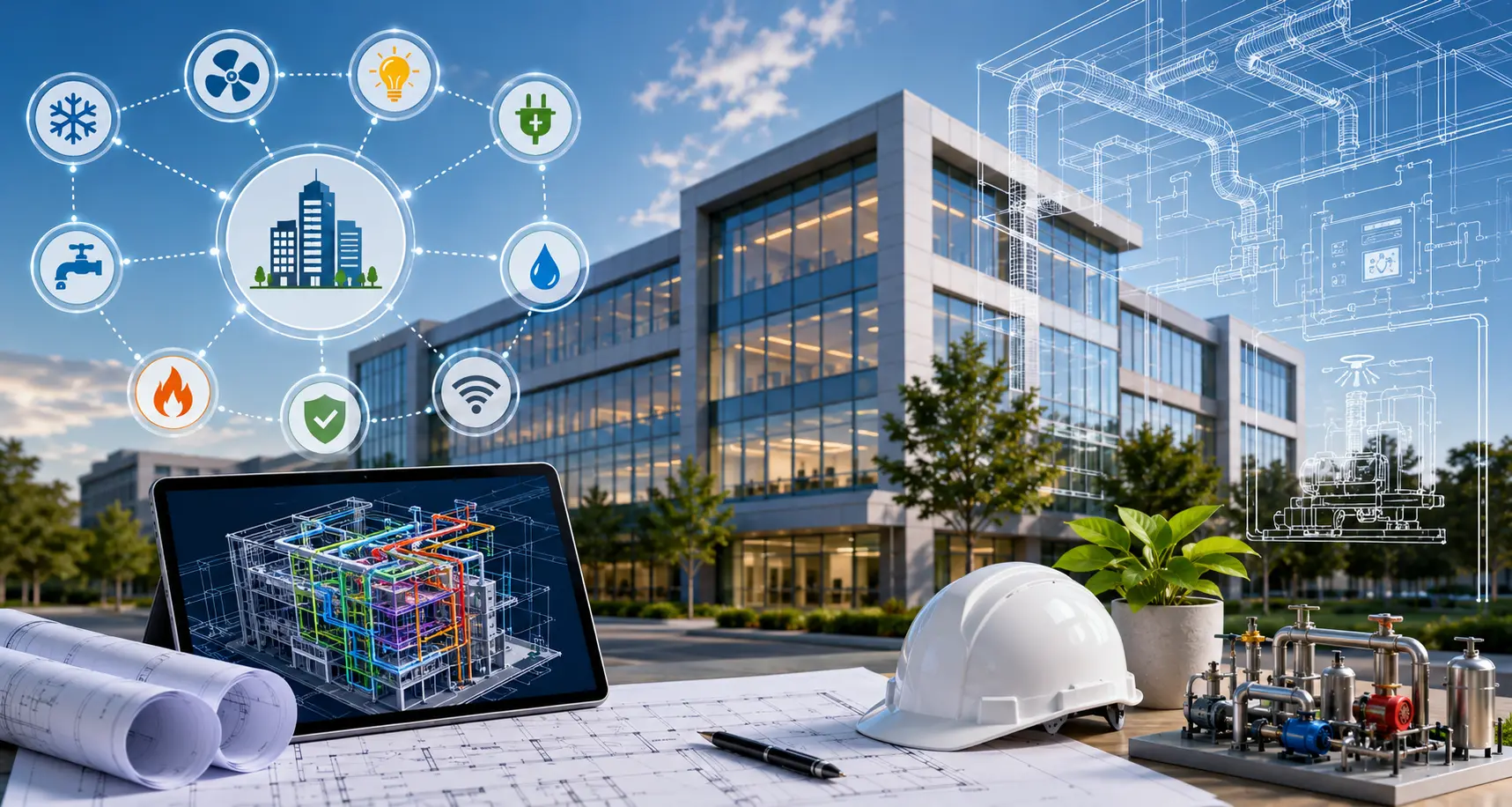
Building system design refers to the planning, engineering, coordination, and integration of multiple systems that make buildings functional and safe. These systems generally include:
- Mechanical Systems (HVAC)
- Electrical Systems
- Plumbing Infrastructure
- Fire Protection Systems
- Fire Alarm Systems
- Lighting Systems
- Energy Management Systems
- Ventilation and Indoor Air Quality Systems
Modern projects require these systems to function as a coordinated ecosystem rather than isolated components. Poor coordination can create costly redesigns, construction delays, increased maintenance costs, and operational inefficiencies.
Strategic building system design focuses on creating solutions that maximize performance while minimizing operational costs.
Prioritizing Integrated MEP Design
One of the smartest strategies in modern construction involves integrating MEP systems early in the project lifecycle.
Mechanical, electrical, and plumbing systems often compete for limited building space. Without early coordination, conflicts arise during construction, increasing costs and delaying project timelines.
This is why many property owners and developers rely on professional MEP Engineering Services in Millstone Township NJ to ensure seamless coordination between disciplines.
Early-stage MEP integration offers several advantages:
- Reduced construction conflicts
- Improved building performance
- Lower lifecycle costs
- Better space utilization
- Faster project completion
- Improved energy efficiency
At R&P Consulting Engineers, collaborative engineering helps align architectural goals with practical building system requirements.
Designing for Energy Efficiency
Energy efficiency has become a fundamental requirement rather than an optional upgrade.
Modern building owners seek lower utility costs while meeting increasingly strict energy codes and sustainability standards.
Smart energy strategies include:
High-Efficiency HVAC Systems
HVAC systems represent one of the largest energy consumers in most buildings.
Modern strategies include:
- Variable speed equipment
- Energy recovery ventilation
- Smart controls
- Zoned temperature management
- High-efficiency equipment selection
Efficient Lighting Design
Lighting design significantly impacts operational costs.
Modern systems often utilize:
- LED technologies
- Occupancy sensors
- Daylight harvesting controls
- Smart automation
Building Automation Systems
Automation technologies allow buildings to monitor performance continuously.
Smart building controls improve:
- Temperature management
- Energy monitoring
- Occupancy management
- Equipment performance
- Maintenance scheduling
When these technologies work together, buildings operate more efficiently while providing improved occupant comfort.
Designing for Flexibility and Future Growth
Modern buildings must accommodate changing needs.
A building designed only for current requirements may become obsolete faster than expected.
Smart design strategies include:
Scalable Infrastructure
Engineers often design systems that allow future expansion without complete replacement.
Examples include:
- Additional electrical capacity
- Expandable mechanical systems
- Future plumbing connections
- Reserved equipment space
Adaptable Floor Plans
Flexible layouts allow future tenant improvements and renovations.
Technology Readiness
Modern infrastructure should support:
- Smart building technologies
- Security systems
- Communication networks
- Automation upgrades
Forward-thinking engineering reduces expensive future modifications.
Improving Indoor Environmental Quality
Modern building design increasingly focuses on occupant wellness.
Poor indoor conditions can negatively affect:
- Productivity
- Comfort
- Health
- Employee retention
- Tenant satisfaction
Smart building strategies prioritize:
Ventilation Optimization
Proper ventilation improves:
- Air circulation
- Contaminant removal
- Humidity control
- Indoor comfort
Thermal Comfort
Temperature consistency directly impacts occupant experience.
Design considerations include:
- Proper equipment sizing
- Zoning strategies
- Balanced airflow
- Load calculations
Noise Reduction
Mechanical equipment placement and system selection significantly influence acoustic comfort.
Modern engineering solutions incorporate noise reduction strategies during early design stages.
Fire Protection and Life Safety Integration
Safety remains one of the most important priorities in building design.
Modern projects require carefully coordinated life safety systems.
These systems include:
- Fire alarms
- Sprinkler systems
- Smoke control
- Emergency lighting
- Emergency power systems
Comprehensive coordination between architectural and engineering disciplines ensures compliance while maintaining building functionality.
R&P Consulting Engineers focuses heavily on integrating fire protection engineering with overall building system performance.
Leveraging Technology During Design
Technology has transformed engineering workflows.
Modern building system design increasingly relies on:
Building Information Modeling (BIM)
BIM provides:
- Clash detection
- Improved coordination
- Better visualization
- Construction efficiency
Simulation Tools
Advanced software allows engineers to evaluate:
- Energy usage
- Ventilation performance
- Thermal comfort
- Equipment sizing
Digital Collaboration
Cloud-based collaboration improves communication between:
- Owners
- Architects
- Engineers
- Contractors
- Consultants
These technologies reduce errors while improving project outcomes.
Understanding Local Codes and Compliance
Building codes continuously evolve.
Engineering teams must remain current with:
- Energy regulations
- Mechanical codes
- Electrical standards
- Fire safety requirements
- Accessibility requirements
Professional engineering support becomes critical because compliance mistakes often create costly redesigns.
This is one reason why property owners often seek experienced MEP Engineering Services in Millstone Township NJ when developing projects that require code-compliant, efficient systems.
Reducing Lifecycle Costs Instead of Initial Costs
One of the most effective building strategies involves focusing beyond initial construction expenses.
Cheaper systems frequently create:
- Higher utility costs
- Increased maintenance
- Shorter equipment life
- More repairs
Lifecycle cost analysis evaluates:
- Installation expenses
- Energy consumption
- Maintenance requirements
- Equipment replacement cycles
Investing in smarter systems often produces long-term savings.
At R&P Consulting Engineers, engineering decisions focus on balancing upfront investment with long-term operational performance.
Collaboration Creates Better Results
Modern projects involve multiple stakeholders.
Successful projects require collaboration between:
- Owners
- Developers
- Architects
- Engineers
- Contractors
- Municipal agencies
Early communication improves:
- Scheduling
- Cost control
- Design coordination
- Project efficiency
Collaborative engineering reduces project risks and improves construction outcomes.
Renovations Require Specialized Engineering Approaches
Renovation projects create additional complexity.
Existing buildings often contain:
- Aging infrastructure
- Limited documentation
- Space restrictions
- Unknown conditions
Modern renovation strategies require:
Site Investigations
Understanding existing conditions prevents surprises.
Capacity Evaluations
Existing systems must be evaluated before expansion.
Phased Construction Planning
Occupied buildings often require carefully sequenced upgrades.
Experienced engineering teams provide valuable guidance when modernizing existing facilities.
Sustainability Is Now Essential
Sustainability goals continue shaping building design.
Modern projects increasingly pursue:
- Lower energy consumption
- Reduced emissions
- Water conservation
- Sustainable materials
- Improved efficiency
Engineering strategies supporting sustainability include:
- Water-saving plumbing systems
- Energy-efficient equipment
- Improved insulation coordination
- Renewable energy integration
Sustainable buildings often provide:
- Lower operational costs
- Higher property value
- Improved occupant satisfaction
- Better regulatory compliance
The Importance of Rapid Response Engineering
Construction schedules move quickly.
Delays in engineering decisions can impact:
- Permit approvals
- Procurement
- Construction sequencing
- Occupancy schedules
Responsive engineering teams provide:
- Faster revisions
- Better communication
- Improved coordination
- Reduced project risk
This client-focused approach remains central to R&P Consulting Engineers, where accessibility and responsiveness support smoother project execution.
Why Engineering Experience Matters
Building systems have become increasingly complex.
Engineering expertise influences:
- Project costs
- Operational efficiency
- Safety
- Compliance
- Long-term building performance
Experienced engineering teams understand how to balance:
- Technical requirements
- Construction realities
- Budget limitations
- Owner expectations
Organizations seeking reliable MEP Engineering Services in Millstone Township NJ often prioritize firms with multidisciplinary experience and proven project success.
Contact Us Today
Modern building system design requires more than technical drawings. Successful projects depend on strategic thinking, coordination, innovation, and practical engineering expertise.
From energy efficiency and sustainability to safety, flexibility, and operational performance, every engineering decision influences how buildings function for decades.
With decades of combined experience in architecture, engineering, construction, MEP, and fire protection systems, R&P Consulting Engineers continues delivering innovative building solutions that help projects move from concept to completion efficiently and effectively.
As construction continues evolving, smart building system strategies will remain essential for creating safer, more efficient, and higher-performing buildings that meet the demands of modern occupants and future growth.