
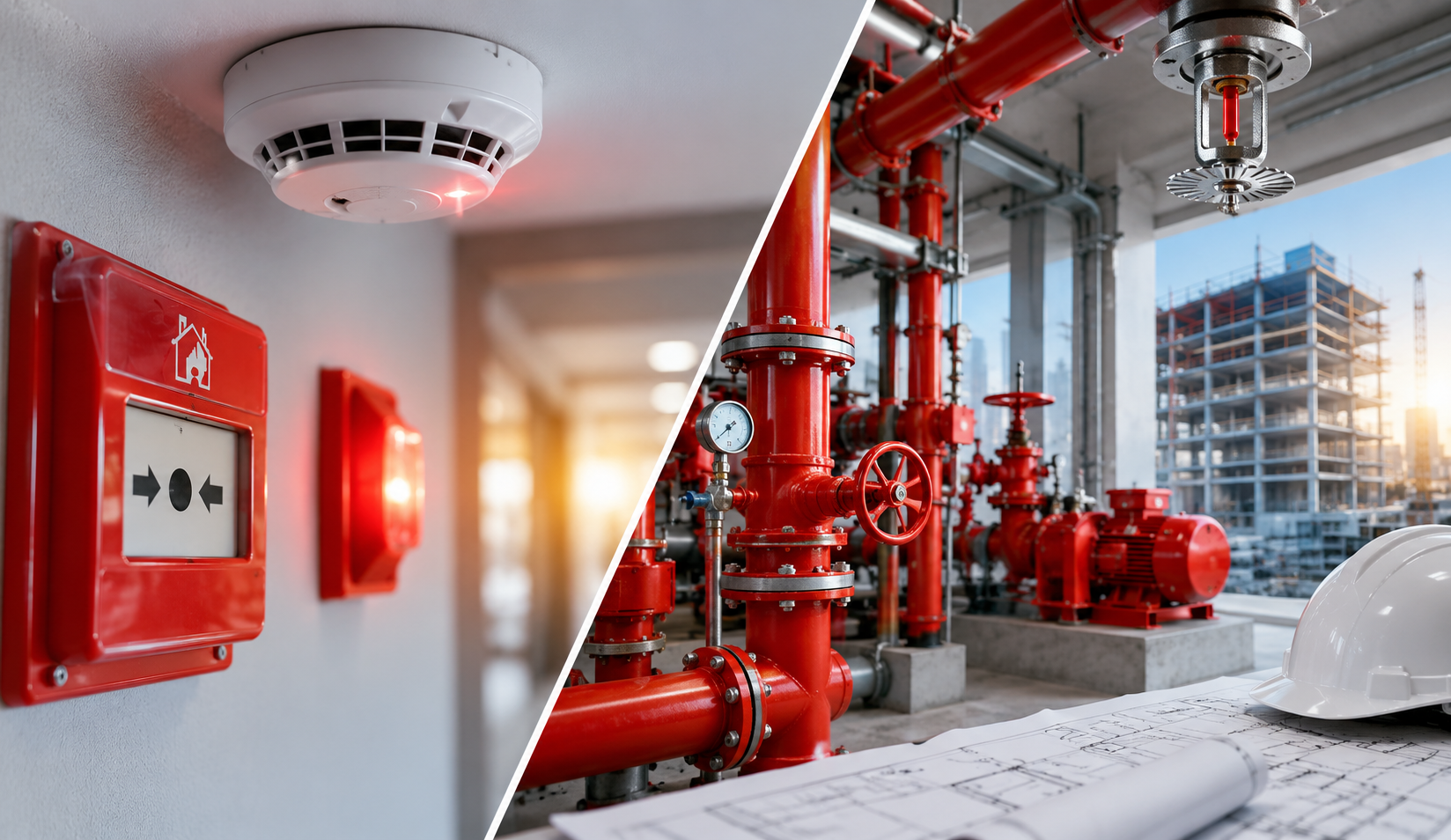
Fire Alarm vs. Fire Protection Engineering: Understanding the Difference
Fire safety is an essential part of every building project, from a small commercial renovation to a large hospital, warehouse, apartment complex, hotel, school, or industrial facility. Yet, two terms are often used interchangeably even though they describe different scopes of work: fire alarm engineering and fire protection engineering.
Understanding the difference can help building owners, architects, developers, contractors, and facility managers make better decisions when planning a new building or renovating an existing property.
A fire alarm system is a critical part of a building’s life-safety strategy, but fire protection engineering goes beyond alarms and detection. It considers the broader range of systems, building characteristics, fire hazards, occupant safety, suppression, smoke management, and other measures used to reduce the effects of fire.
For projects in New York and New Jersey, these services also need to be coordinated with applicable building codes, fire codes, standards, and local requirements. R&P Consulting Engineers provides MEP/FP engineering solutions that include mechanical, electrical, fire alarm, plumbing, and fire protection engineering, with project development focused on New York and New Jersey.
So, what exactly is the difference between a fire alarm engineer and a fire protection engineer? And when does a project need one, the other, or both?
Let’s take a closer look.
What Is Fire Alarm Engineering?
Fire alarm engineering focuses primarily on the design, coordination, and documentation of systems that detect fire or smoke, notify building occupants, communicate emergency conditions, and support an organized emergency response.
A modern fire alarm system can include several interconnected components, such as:
- Smoke detectors
- Heat detectors
- Manual pull stations
- Fire alarm control panels
- Audible notification appliances
- Visual notification appliances
- Supervisory devices
- Monitoring interfaces
- Emergency communication systems
- Interfaces with other building systems
The purpose is not simply to install alarms throughout a building. The system must be designed around the building’s occupancy, layout, size, use, construction characteristics, potential hazards, and other life-safety considerations.
NFPA materials note that fire alarm and detection design may constitute engineering work depending on the jurisdiction and that applicable state or local licensing requirements should be followed.
This is one reason professional engineering involvement can be important for commercial and complex building projects.
What Does a Fire Alarm Engineer Do?
A fire alarm engineer may be involved in activities such as:
- Reviewing architectural plans
- Evaluating occupancy and building use
- Determining appropriate detection and notification strategies
- Coordinating device locations
- Developing fire alarm system layouts
- Coordinating power and electrical requirements
- Integrating fire alarm systems with other life-safety systems
- Preparing engineering documentation
- Coordinating with architects and contractors
- Supporting code and approval requirements
The exact scope depends on the project and jurisdiction.
For example, a commercial office building may have very different fire alarm requirements from a warehouse, healthcare facility, restaurant, school, or high-rise residential building.
What Is Fire Protection Engineering?
Fire protection engineering is a much broader discipline.
The Society of Fire Protection Engineers describes fire protection engineering as a field involving the application of engineering principles to protect people and property from fire and its effects. The discipline can encompass fire detection, alarm, suppression, smoke control, passive fire protection, egress, and other life-safety considerations.
A fire protection engineer evaluates how a fire could start, develop, spread, and affect occupants and property. The engineer then considers strategies that can prevent, detect, control, suppress, or otherwise mitigate those hazards.
This means fire alarms are actually one component within the larger field of fire protection.
Fire Protection Engineering May Include:
- Fire alarm systems
- Fire detection systems
- Sprinkler systems
- Fire suppression systems
- Standpipe systems
- Smoke control
- Fire and smoke barriers
- Fire-rated assemblies
- Compartmentation
- Means of egress
- Emergency communication
- Fire pumps and related systems
- Special hazard protection
- Life-safety analysis
- Fire safety consulting
- Code compliance coordination
The exact scope varies according to the building, occupancy, applicable codes, project requirements, and jurisdiction.
In other words, fire alarm engineering answers an important part of the question: “How will we detect and communicate a fire?”
Fire protection engineering asks a broader question: “How will this building and its occupants be protected from fire and its effects?”
Fire Alarm Engineering vs. Fire Protection Engineering
The easiest way to understand the difference is to compare their primary areas of focus.
| Fire Alarm Engineering | Fire Protection Engineering |
| Focuses on fire detection and notification | Focuses on the broader fire safety strategy |
| Smoke and heat detection | Fire hazards and risk mitigation |
| Alarm notification | Detection, alarm, suppression, and control |
| Fire alarm control panels | Sprinkler and suppression systems |
| Audible and visual notification | Smoke control and compartmentation |
| Device placement and system coordination | Life safety and building fire protection |
| Emergency communication interfaces | Broader code and fire safety analysis |
| Primarily a fire alarm system scope | Can encompass multiple fire protection disciplines |
The two areas overlap significantly.
A well-designed fire protection strategy often requires the fire alarm system to communicate with other systems. For example, a fire alarm condition may interact with smoke control equipment, elevator functions, fire suppression systems, emergency communication systems, or other building systems depending on the project’s design.
This is why coordination is so important.
Why Fire Alarms Are Only One Part of Fire Protection
Imagine a commercial building where a smoke detector successfully detects a fire.
That detection is important, but it is only the beginning of the building’s response.
The occupants may need notification.
Emergency responders may need information.
Fire doors may need to perform their intended function.
Smoke may need to be controlled.
Sprinklers or another suppression system may need to control the fire.
Occupants need safe paths to exit.
The building’s construction and compartmentation can influence how quickly fire and smoke spread.
This illustrates why fire protection engineering takes a systems-level approach.
The Society of Fire Protection Engineers and other professional organizations recognize active systems such as fire alarms, water-based suppression, gaseous suppression, smoke control, and emergency communication, as well as passive measures such as fire barriers, compartmentation, fire doors, firestopping, and means of egress.
The Role of Codes and Standards
Fire safety engineering does not happen in isolation.
Design professionals must consider applicable building codes, fire codes, adopted standards, and jurisdictional requirements.
NFPA standards are widely used in fire protection system design. For example, NFPA 13 addresses sprinkler systems, while NFPA 72 addresses fire alarm and signaling systems. The applicable editions and requirements depend on what has been adopted by the authority having jurisdiction for a particular project.
This distinction is important because simply saying that a system is “NFPA compliant” does not necessarily describe the complete approval process for a project.
Local requirements can also affect:
- Engineering documentation
- Professional licensing
- Plan review
- System design
- Inspections
- Permitting
- Installation
- Testing
- Acceptance
For that reason, early coordination between the engineering team, architect, contractor, owner, and relevant authorities can help identify requirements before construction progresses too far.
Why Fire Protection Engineering Matters During Building Design
One common mistake is treating fire protection as something that can be added at the end of a construction project.
In reality, fire safety can influence the building layout and other engineering systems from the beginning.
Consider a new commercial building.
The location of exits, fire-rated walls, mechanical systems, electrical systems, sprinkler infrastructure, fire alarm devices, shafts, equipment rooms, and other building elements can all interact.
If these systems are coordinated early, conflicts can often be identified before they become construction issues.
A fire protection engineer can work with the project team to consider fire safety requirements while the building is still being designed.
This approach can be particularly important for:
- High-rise buildings
- Healthcare facilities
- Hotels
- Schools
- Warehouses
- Industrial buildings
- Restaurants
- Mixed-use buildings
- Large residential developments
- Transportation facilities
- Complex renovations
- Buildings with unusual hazards
R&P Consulting Engineers lists commercial, residential, medical, industrial, warehouse, transportation, hotel, education, restaurant, and other project categories among the building types it works with.
When Do You Need a Fire Alarm Engineer?
A fire alarm engineer may be needed whenever a project involves the design, modification, expansion, or coordination of a fire alarm system.
Examples include:
New Construction
New buildings need fire alarm systems designed around the building’s intended use and configuration.
Renovations
A renovation can change occupancy, room layouts, walls, ceilings, electrical systems, or other conditions that affect the existing fire alarm system.
Building Expansions
Adding new floors, rooms, wings, or occupancy areas may require changes to an existing system.
Change of Occupancy
Converting a property from one use to another can create new fire safety requirements.
Complex Commercial Projects
Large commercial buildings often require extensive coordination between fire alarm, electrical, mechanical, architectural, and fire protection systems.
A qualified fire alarm engineer in New Jersey can help project teams address these design and coordination needs while accounting for applicable requirements.
When Do You Need a Fire Protection Engineer?
A fire protection engineer may become particularly valuable when the project involves multiple fire protection systems or complex life-safety considerations.
For example, an engineer may evaluate:
- Fire hazards
- Occupant characteristics
- Suppression requirements
- Sprinkler systems
- Smoke movement
- Fire-rated construction
- Egress considerations
- Special hazards
- Fire alarm integration
- Building code requirements
- Alternative or performance-based approaches
A fire protection engineer can therefore help connect individual systems into a coordinated fire safety strategy.
According to professional guidance from SFPE and its partner organizations, engineers involved in fire protection need appropriate education, experience, and competency for their responsibilities, while local laws determine specific professional and licensing requirements.
Why New York and New Jersey Projects Require Careful Coordination
Every jurisdiction has its own adopted codes, administrative procedures, and project requirements.
For projects in New York and New Jersey, understanding the local regulatory environment is an important part of the engineering process.
R&P Consulting Engineers states that its project development work is focused on New York and New Jersey and that its team is familiar with the local codes and regulations in both states.
That regional experience can be relevant when coordinating fire alarm and fire protection engineering with architectural, mechanical, electrical, plumbing, and construction requirements.
For a project team searching for a fire protection engineer in New York, the goal should not simply be finding someone who can produce drawings. The engineering team should understand how the fire protection scope interacts with the overall building design and applicable requirements.
Similarly, a fire alarm engineer in New Jersey should understand that fire alarm design is part of a larger life-safety system and needs to coordinate with the building’s other systems.
Fire Alarm and Fire Protection Engineering Work Together
Although fire alarm engineering and fire protection engineering have different scopes, they should not be viewed as completely separate disciplines.
They often work together.
For example, consider a sprinkler-protected commercial facility.
A fire may activate a sprinkler system. Waterflow or supervisory information may be transmitted through the fire alarm system. Occupants may receive audible and visual notification. Other building systems may respond according to the project’s programmed sequence of operations.
The effectiveness of the overall strategy depends on coordination.
This is why integrated MEP/FP engineering can be valuable.
R&P Consulting Engineers describes its mission as providing integrated MEP/FP solutions covering mechanical, electrical, fire alarm, plumbing, medical plumbing, and fire protection engineering.
Fire Protection Engineering for Existing Buildings
Fire protection engineering is not limited to new construction.
Existing buildings can develop fire safety challenges over time.
Renovations, tenant improvements, changes in occupancy, new equipment, additions, aging systems, and changes to building layouts can all affect fire protection requirements.
A building owner may need an engineering review when:
- Renovating an older building
- Changing the building’s use
- Adding new tenant spaces
- Expanding the facility
- Modifying interior layouts
- Adding specialized equipment
- Updating fire alarm systems
- Reviewing fire protection systems
- Coordinating a major renovation
R&P Consulting Engineers states that its services extend to both new construction and renovations of existing structures.
This makes early engineering involvement useful when planning significant modifications.
What Should Building Owners Ask an Engineering Firm?
Before selecting an engineering consultant, building owners and developers can ask several practical questions:
1. What type of projects do you handle?
Experience with similar building types can help the design team understand the project’s challenges.
2. Do you provide both fire alarm and fire protection engineering?
If both disciplines are required, integrated coordination may simplify the project.
3. Do you work with the architectural and MEP teams?
Fire protection systems frequently interact with other building systems.
4. Are you familiar with local requirements?
New York and New Jersey projects can involve jurisdiction-specific requirements and review processes.
5. Can you support renovation projects?
Existing buildings often present different challenges from new construction.
6. How will the fire protection systems be coordinated?
Ask how fire alarm, suppression, mechanical, electrical, plumbing, and architectural systems will interact.
7. What documentation will be provided?
Understanding the expected drawings, calculations, specifications, and other engineering deliverables can help avoid confusion later.
Choosing Between Fire Alarm Engineering and Fire Protection Engineering
In many cases, the answer is not necessarily one or the other.
A project may require both.
A fire alarm engineer focuses on the detection, notification, signaling, and associated coordination of the fire alarm system.
A fire protection engineer considers the broader fire safety strategy and may address fire detection, suppression, smoke control, passive protection, egress, and other life-safety elements.
The appropriate scope depends on the building, project objectives, applicable codes, hazards, occupancy, and jurisdiction.
Professional organizations also emphasize that the exact responsibilities and licensing requirements can vary by jurisdiction.
Why Integrated Engineering Can Make a Difference
A building is a connected system.
The electrical system supplies power.
The mechanical system manages air movement.
The plumbing system provides water and drainage.
The fire alarm system detects and communicates emergency conditions.
Fire protection systems help control or suppress fire.
Architectural and structural elements influence compartmentation, fire resistance, and occupant movement.
When these systems are designed independently without sufficient coordination, conflicts can appear during construction or review.
Integrated MEP/FP design helps the project team consider these relationships earlier.
R&P Consulting Engineers describes its approach as merging architecture, engineering, and construction backgrounds with collaborative MEP/FP system design. Its stated service portfolio includes mechanical, electrical, fire alarm, plumbing, and fire protection engineering.
Conclusion
The difference between fire alarm engineering and fire protection engineering comes down largely to scope.
Fire alarm engineering concentrates on detecting fire-related conditions, notifying occupants, communicating emergency information, and coordinating the fire alarm system with other building functions.
Fire protection engineering takes a broader view. It applies engineering principles to identify fire hazards and develop strategies involving detection, suppression, smoke control, passive protection, life safety, and other measures intended to reduce the impact of fire.
Neither should be treated as an afterthought.
For architects, developers, contractors, and building owners planning a project in New York or New Jersey, early coordination with qualified engineering professionals can help integrate fire safety into the overall building design.
R&P Consulting Engineers provides MEP/FP engineering services, including fire alarm and fire protection engineering, for projects across New York and New Jersey. The firm reports more than 26 years of experience and work across commercial, residential, medical, industrial, hospitality, education, and other project types.
Whether you are planning a new building, renovating an existing property, or evaluating the fire safety requirements of a complex project, understanding the relationship between fire alarm systems and broader fire protection engineering is an important first step.
A properly coordinated fire safety strategy can help the project team address life-safety requirements while supporting the building’s overall design, functionality, and regulatory objectives.